

What Is VAC Power? Understanding AC Voltage, Meaning, Applications, and More
Apr 25, 2020
Leave a message
When working with electrical systems, you may often see voltage ratings such as 120 VAC, 230 VAC, or 240 VAC. But what does VAC mean, and why is it important in power systems?
VAC stands for Volts Alternating Current. It is a measurement unit used to describe the voltage level of an alternating current (AC) electrical system. Unlike direct current (DC), where electrical flow moves in only one direction, alternating current periodically changes direction and is the standard form of electricity used in homes, commercial buildings, and industrial power networks.
Understanding VAC power is essential for selecting the right electrical components, including transformers, power supplies, inductors, and other magnetic components used in modern electronic equipment.
What Does VAC Mean?
VAC is an abbreviation for volts AC (Alternating Current).
The term contains two important parts:
- V = Volt, the unit used to measure electrical potential difference.
- AC = Alternating Current, a type of electrical current that periodically reverses direction.
Therefore, VAC describes the voltage level of an alternating current electrical supply.
For example:
- 120 VAC means an AC voltage supply of 120 volts.
- 230 VAC means an AC voltage supply of 230 volts.
- 480 VAC is commonly used in industrial three-phase electrical systems.
The higher the VAC rating, the greater the potential difference available to drive electrical current through a circuit.
How Does VAC Power Work?
In an AC power system, the voltage does not remain constant. Instead, it follows a waveform, usually a sine wave, where the voltage rises and falls over time.

The number of times the AC waveform completes a cycle per second is called frequency, measured in Hertz (Hz).
Common AC frequencies include:
- 50 Hz – widely used in many countries across Europe, Asia, and Africa.
- 60 Hz – commonly used in North America and some other regions.
For example, a power label showing: Input: 100-240 VAC, 50/60 Hz
means that the device can operate with AC power supplies ranging from 100 volts to 240 volts and can support both 50 Hz and 60 Hz electrical frequencies.
Most electronic devices do not use AC power directly. Instead, they convert VAC input into DC power through components such as:
- Transformers
- Rectifiers
- Voltage regulators
- Switching power supplies
This conversion allows sensitive electronic circuits to operate safely and efficiently.
VAC vs VDC: What Is the Difference?
One of the most common questions in electrical engineering is the difference between VAC and VDC.

| Feature | VAC | VDC |
|---|---|---|
| Full Name | Volts Alternating Current | Volts Direct Current |
| Current Direction | Changes periodically | Flows in one direction |
| Waveform | Usually sine wave | Constant voltage level |
| Frequency | Usually 50Hz or 60Hz | Typically 0Hz |
| Common Applications | Power grids, buildings, industrial equipment | Batteries, electronics, control circuits |
| Examples | 120VAC, 230VAC, 480VAC | 5VDC, 12VDC, 24VDC |
Both VAC and VDC are essential in modern electrical systems. AC power is preferred for electricity transmission over long distances, while DC power is commonly used inside electronic devices.
Common VAC Voltage Ratings
Different applications use different VAC levels depending on regional standards and equipment requirements.
What Is 120 VAC?
120 VAC is one of the most common residential voltage ratings.
It is widely used for:
- Household appliances
- Lighting systems
- Office equipment
- Consumer electronics
Many devices in North America are designed to operate at approximately 120 VAC.
What Is 230 VAC?
230 VAC is commonly used in residential and commercial electrical systems in many countries.
Applications include:
- Home appliances
- Industrial equipment
- Commercial power systems
- Electrical machinery
Higher voltage systems can deliver power more efficiently because they can transmit the same amount of energy with lower current.
What Is 480 VAC?
480 VAC is frequently found in industrial environments.
It is commonly used for:
- Large motors
- Factory automation systems
- Industrial machinery
- High-power electrical equipment
Industrial systems often use higher VAC ratings because they require significant amounts of electrical power.
Single Phase vs Three Phase VAC Power
VAC systems can generally be divided into single-phase and three-phase power.
Single-Phase VAC Power
Single-phase AC power is commonly used in homes and small commercial applications.
Typical uses include:
Lighting
Computers
Small appliances
Office equipment
Three-Phase VAC Power
Three-phase AC power is mainly used in industrial applications because it provides more stable and efficient power delivery.
Common applications include:
- Electric motors
- Manufacturing equipment
- Industrial automation systems
- Heavy machinery
Three-phase systems typically provide better performance for high-power applications compared with single-phase systems.
The Relationship Between VAC Power and Transformers
Transformers play a critical role in VAC power systems.
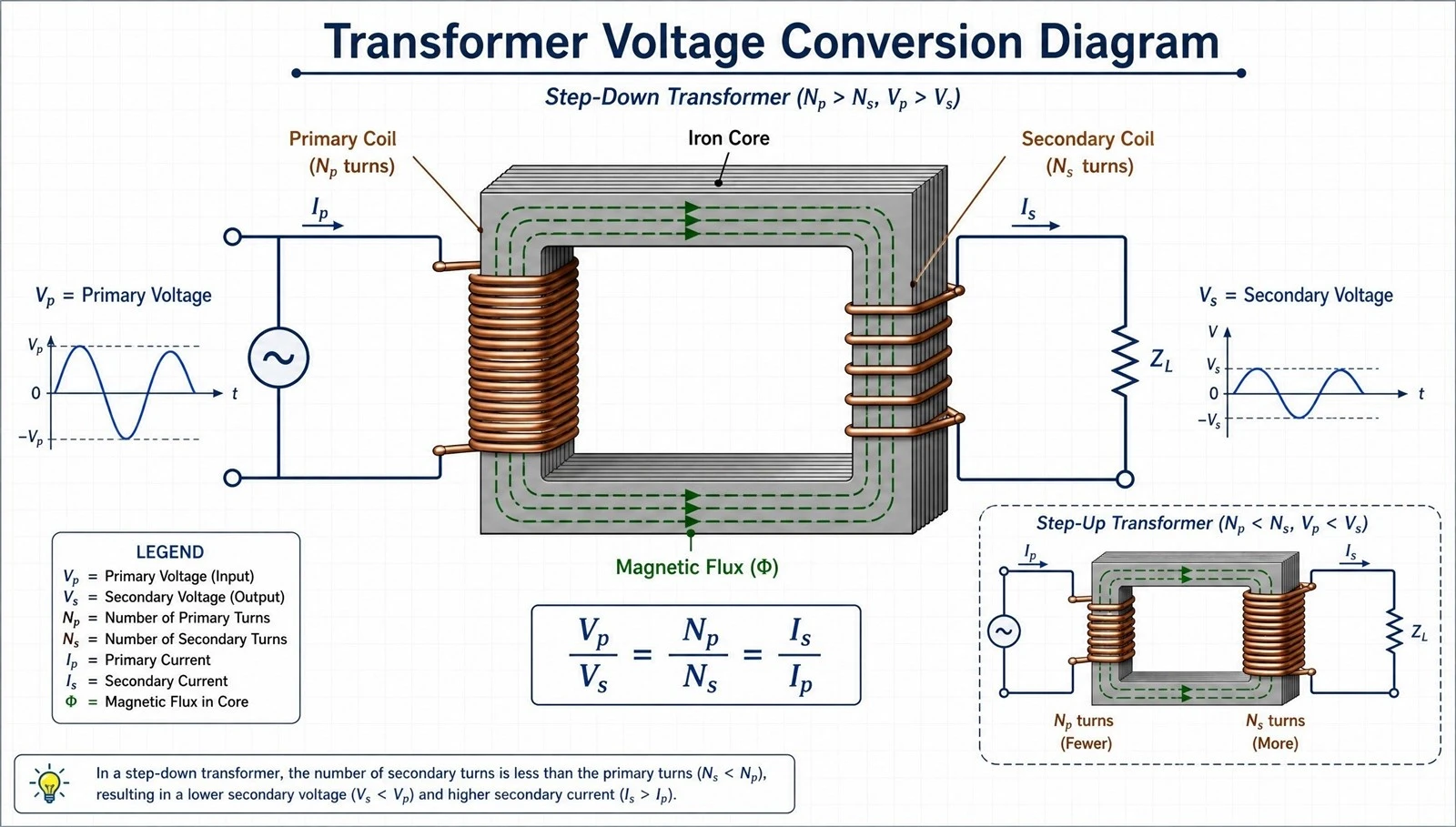
A transformer is an electrical component that transfers energy between circuits through electromagnetic induction. It can increase or decrease AC voltage levels depending on system requirements.
For example:
- A step-down transformer reduces high VAC voltage to a lower and safer voltage.
- A step-up transformer increases voltage for efficient long-distance transmission.
Many electronic products use transformers to convert incoming AC power into a suitable voltage level.
Examples include:
- Industrial power supplies
- Medical equipment
- Communication systems
- Consumer electronics
- Control systems
For engineers designing electrical equipment, selecting the correct transformer with the appropriate VAC rating is essential for safety, reliability, and efficiency.
Where Is VAC Power Used?
VAC power is everywhere in modern electrical systems.
Common applications include:
Residential Applications
- Home electrical outlets
- Lighting systems
- Kitchen appliances
- Heating and cooling equipment
Commercial Applications
- Office buildings
- Data centers
- Retail systems
- HVAC equipment
Industrial Applications
- Factory automation
- Motor drives
- Production equipment
- Control panels
Electronic Equipment
Many electronic devices receive VAC input but internally operate using DC power.
Examples include:
- Computers
- Chargers
- Industrial controllers
- Communication devices
Why Is Understanding VAC Important?
Understanding VAC ratings helps engineers and technicians:
Select the Correct Components
Electrical components must match system voltage requirements. Using components with incorrect voltage ratings can cause equipment failure or safety risks.
Improve System Efficiency
Proper voltage selection helps reduce energy loss and improves overall system performance.
Ensure Electrical Safety
Different VAC levels require different insulation, protection, and design considerations.
Design Reliable Power Systems
Engineers use VAC specifications when designing transformers, power supplies, and electrical equipment.
Frequently Asked Questions About VAC Power
Is VAC the Same as AC?
Not exactly.
AC describes the type of electrical current, while VAC describes the voltage measurement of an AC electrical system.
For example, electricity from a wall outlet is AC power, and its voltage may be rated as 120 VAC or 230 VAC.
Is 120 VAC Dangerous?
Yes.
Although 120 VAC is commonly used in residential environments, it can still cause serious electric shock. Proper safety procedures and electrical protection should always be followed.
Can a Device Work With Different VAC Ratings?
Some devices can operate across a wide VAC range.
For example, a power adapter labeled 100-240 VAC can automatically adjust to different input voltages. However, equipment should always be operated within its specified voltage range.
How Does VAC Become DC?
Many electronic devices use a power conversion process:
1.VAC input enters the power supply.
2.A transformer adjusts the voltage level.
3.A rectifier converts AC into DC.
4.Regulators provide stable output voltage.
This process allows electronic circuits to receive safe and reliable DC power.
Conclusion
VAC power refers to the voltage level of an alternating current electrical system. It is a fundamental concept used in residential, commercial, and industrial power applications.
Understanding VAC helps engineers select suitable electrical components, design reliable power systems, and improve equipment safety and performance.
From household electronics to industrial machinery, VAC power works together with transformers, inductors, and power conversion technologies to deliver the energy needed by modern electrical systems.
For companies developing electrical equipment or power solutions, choosing the right AC voltage components is critical for achieving long-term reliability and efficiency.
For more information, please contact us at sales@xfullstar.com