

How to install a low frequency transformer?A complete Guide
Nov 17, 2026
Leave a message
A low frequency transformer is an essential electrical component in industrial control systems, machine tools, automation equipment, and power supply applications. Proper installation is critical to ensuring electrical safety, stable voltage conversion, efficient operation, and long service life.

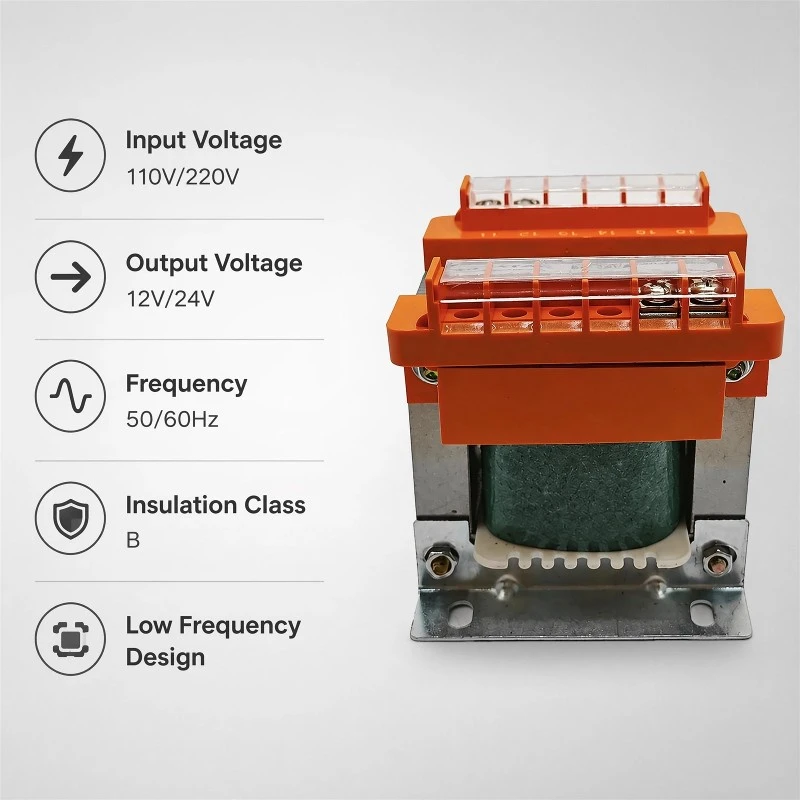
However, installing a low frequency transformer involves more than simply connecting input and output wires. Engineers must consider transformer specifications, mounting conditions, ventilation, electrical connections, grounding, and pre-energization testing.
Whether you are installing a BK control transformer in a machine tool or integrating a low frequency transformer into an industrial control cabinet, understanding the correct installation procedure can help prevent equipment damage and unexpected downtime.
In this guide, we will explain how to install a low frequency transformer step by step, covering essential preparation, wiring, safety precautions, and maintenance recommendations.
1. Check the Transformer Specifications Before Installation
Before beginning any low frequency transformer installation, verify that the selected transformer matches the electrical requirements of your application.
Different transformers have different voltage ratings, power capacities, frequencies, and connection configurations. Using an incorrectly rated transformer may result in overheating, unstable output voltage, or premature equipment failure.
Check the following specifications on the transformer nameplate:
- Rated input voltage: The primary voltage supplied by the electrical system.
- Rated output voltage: The secondary voltage required by the connected equipment.
- Rated capacity: The transformer's power rating, usually expressed in VA or kVA.
- Operating frequency: Confirm whether the transformer is designed for 50Hz, 60Hz, or another specified frequency.
- Phase configuration: Determine whether the transformer is single-phase or three-phase.
- Insulation class: Check the insulation system and permitted operating temperature.
- Wiring diagram: Identify the primary and secondary terminals and any available voltage taps.
For example, a BK series control transformer may be used in machine tool control circuits where a specific secondary voltage is required for relays, contactors, and other control components.
Always compare the nameplate information with the electrical drawings and equipment requirements before proceeding.
2. Choose a Suitable Installation Location
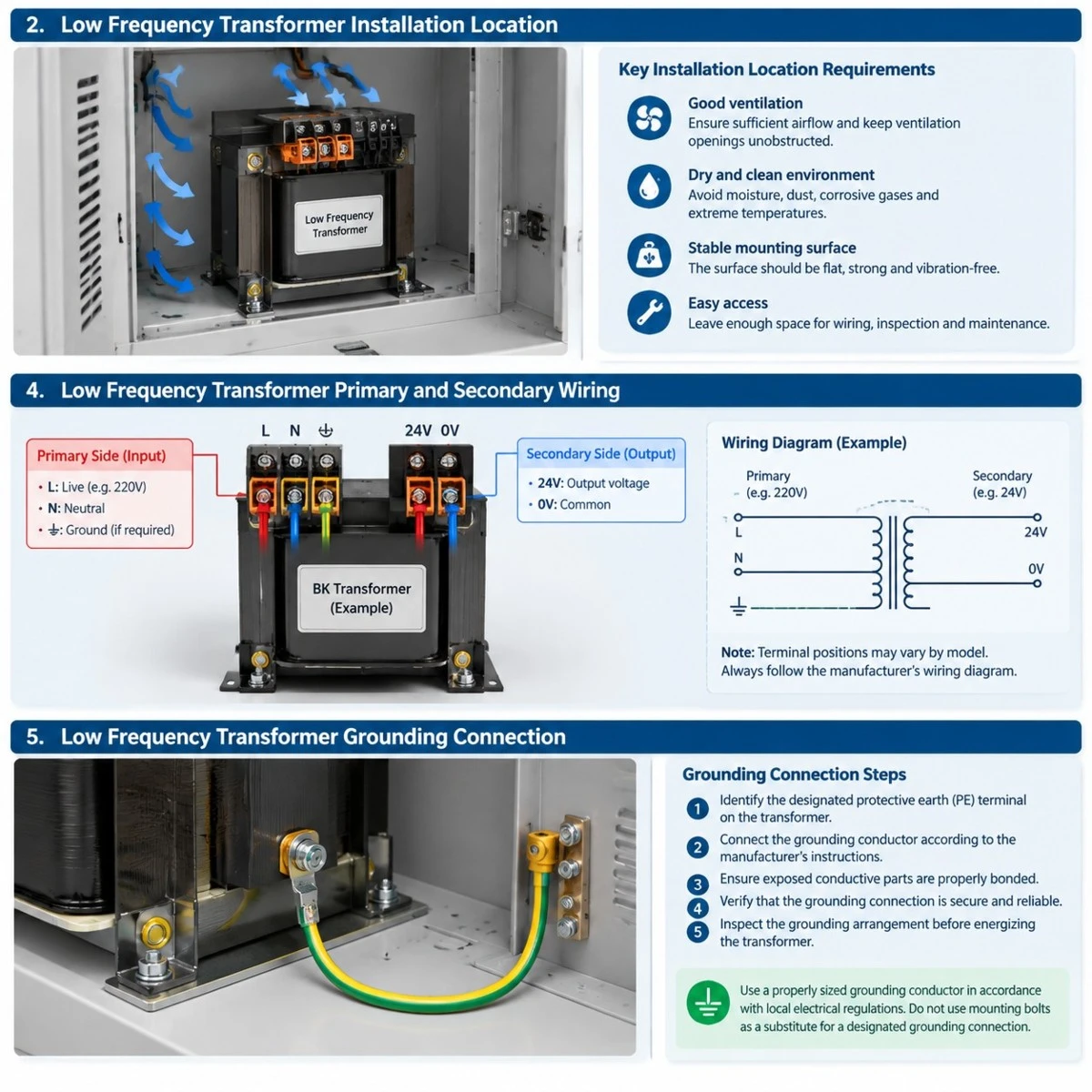
Selecting the correct installation location is another important part of installing a low frequency transformer.
A suitable location helps maintain stable operating temperatures, reduces vibration, and makes future inspection and maintenance easier.
Consider the following factors:
Ventilation: Choose a location with sufficient airflow. Dry-type low frequency transformers generate heat during operation, so ventilation openings must remain unobstructed.
Environmental conditions: Avoid locations exposed to excessive moisture, conductive dust, corrosive gases, or other environmental conditions outside the manufacturer's specified limits.
Mounting surface: The installation surface should be flat, stable, and strong enough to support the transformer's weight.
Accessibility: Leave sufficient space for electrical connections, inspection, and maintenance.
Vibration and noise: Avoid mounting the transformer on structures that may amplify vibration or operating noise.
For industrial applications, low frequency transformers are often installed inside electrical control cabinets or dedicated equipment enclosures. Make sure the cabinet design provides adequate ventilation and sufficient electrical working space.
3. Mount the Low Frequency Transformer Securely
Once the installation location has been selected, the next step is to mount the transformer.
Proper mounting prevents unnecessary movement, mechanical stress, and vibration during operation.
Follow these general installation recommendations:
1.Inspect the mounting surface and confirm that it is level and structurally suitable.
2.Position the transformer according to the manufacturer's installation instructions.
3.Align the mounting holes with the designated fixing points.
4.Use appropriate mounting hardware to secure the transformer.
5.Check that the transformer is stable and that no mechanical components are damaged.
6.Confirm that ventilation openings and access points remain unobstructed.
For certain dry-type transformers, manufacturer-approved vibration isolation pads may help reduce mechanical noise.
If you are installing a compact BK transformer inside a control cabinet, make sure the mounting position allows convenient access to the primary and secondary terminals.
Do not modify the transformer enclosure or mounting structure without the manufacturer's approval.
4. Connect the Primary and Secondary Wiring
Correct wiring is one of the most important steps in low frequency transformer installation.
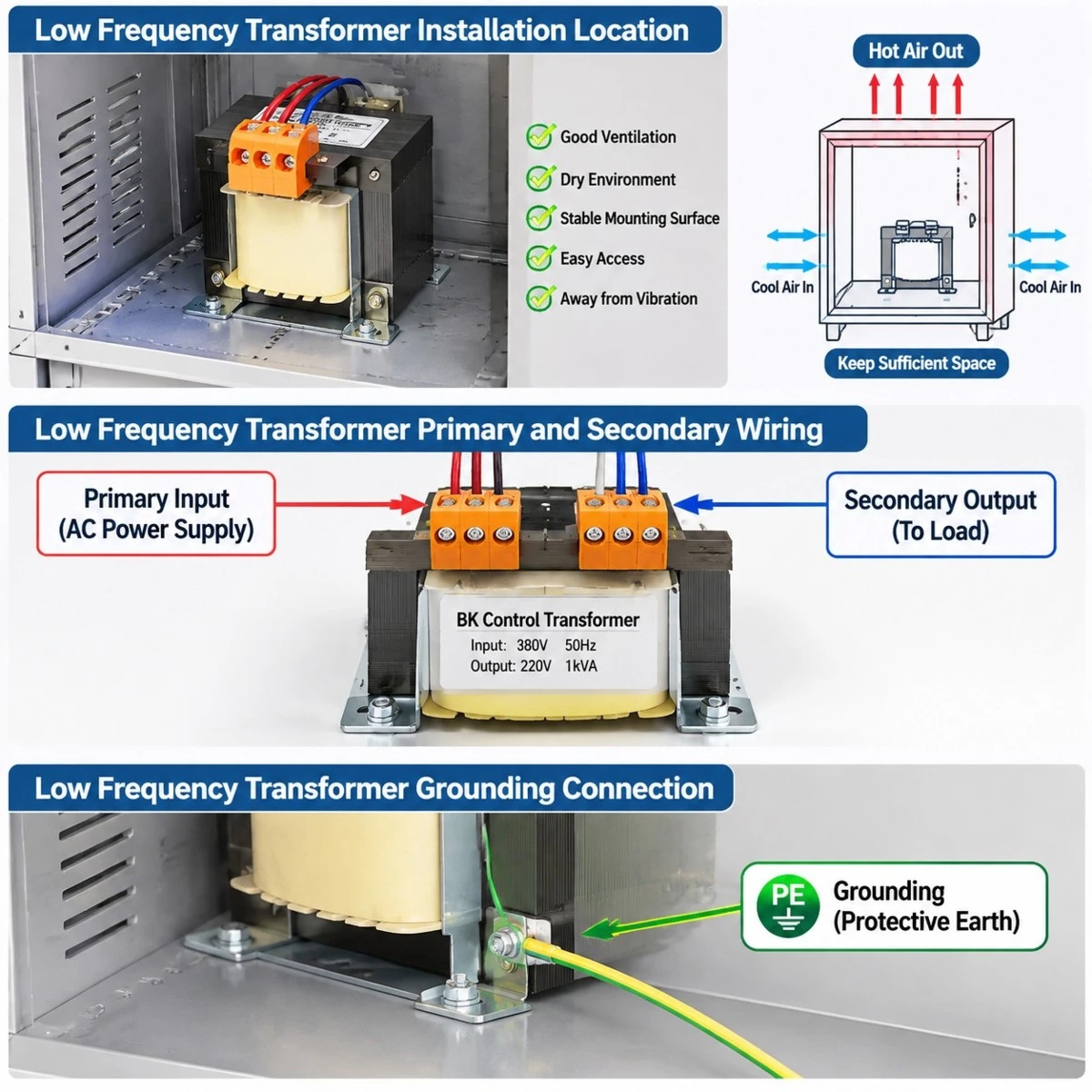
A transformer typically has two main electrical sides:
- Primary winding: Receives electrical power from the input supply.
- Secondary winding: Delivers the required output voltage to the connected load.
Before making electrical connections, disconnect the power supply and apply appropriate lockout/tagout procedures. Verify the absence of hazardous voltage using properly rated test equipment.
Electrical connections must be performed by qualified personnel in accordance with the manufacturer's wiring diagram and applicable electrical regulations.
Primary Side Wiring
The primary side must be connected to the correct input voltage.
Before connecting the wires:
- Identify the primary terminals using the nameplate and wiring diagram.
- Confirm that the available supply voltage matches the transformer's rated input voltage.
- Check the correct voltage tap configuration, if applicable.
- Select conductors according to the rated current, installation conditions, and local electrical codes.
- Install the required overcurrent protection.
An incorrect primary connection can cause excessive current, overheating, or transformer failure.
Secondary Side Wiring
The secondary side supplies power to the connected electrical equipment.
During secondary wiring:
- Identify the correct output terminals.
- Verify the required output voltage.
- Check the polarity and terminal arrangement where applicable.
- Confirm that the connected load does not exceed the transformer's rated capacity.
- Secure all electrical connections according to the manufacturer's specified torque values.
For industrial control applications, the secondary winding may supply power to contactors, relays, control circuits, and other electrical components.
Important: Never assume that terminal positions are identical across different transformer models. Always follow the specific connection diagram supplied with the product.
5. Ensure Proper Transformer Grounding
Grounding is essential for electrical safety.
A properly grounded transformer enclosure helps reduce the risk of electric shock if an insulation fault causes an energized conductor to contact an exposed conductive part.
During installation:
1.Identify the designated protective earth (PE) terminal.
2.Connect the protective grounding conductor according to the manufacturer's instructions.
3.Ensure that exposed conductive enclosures are properly bonded.
4.Verify that grounding connections are secure.
5.Inspect the grounding arrangement before energizing the transformer.
The grounding conductor must be appropriately sized according to the applicable electrical regulations and installation design.
Never use mounting bolts or other mechanical components as a substitute for a designated grounding connection unless explicitly permitted by the manufacturer's design.
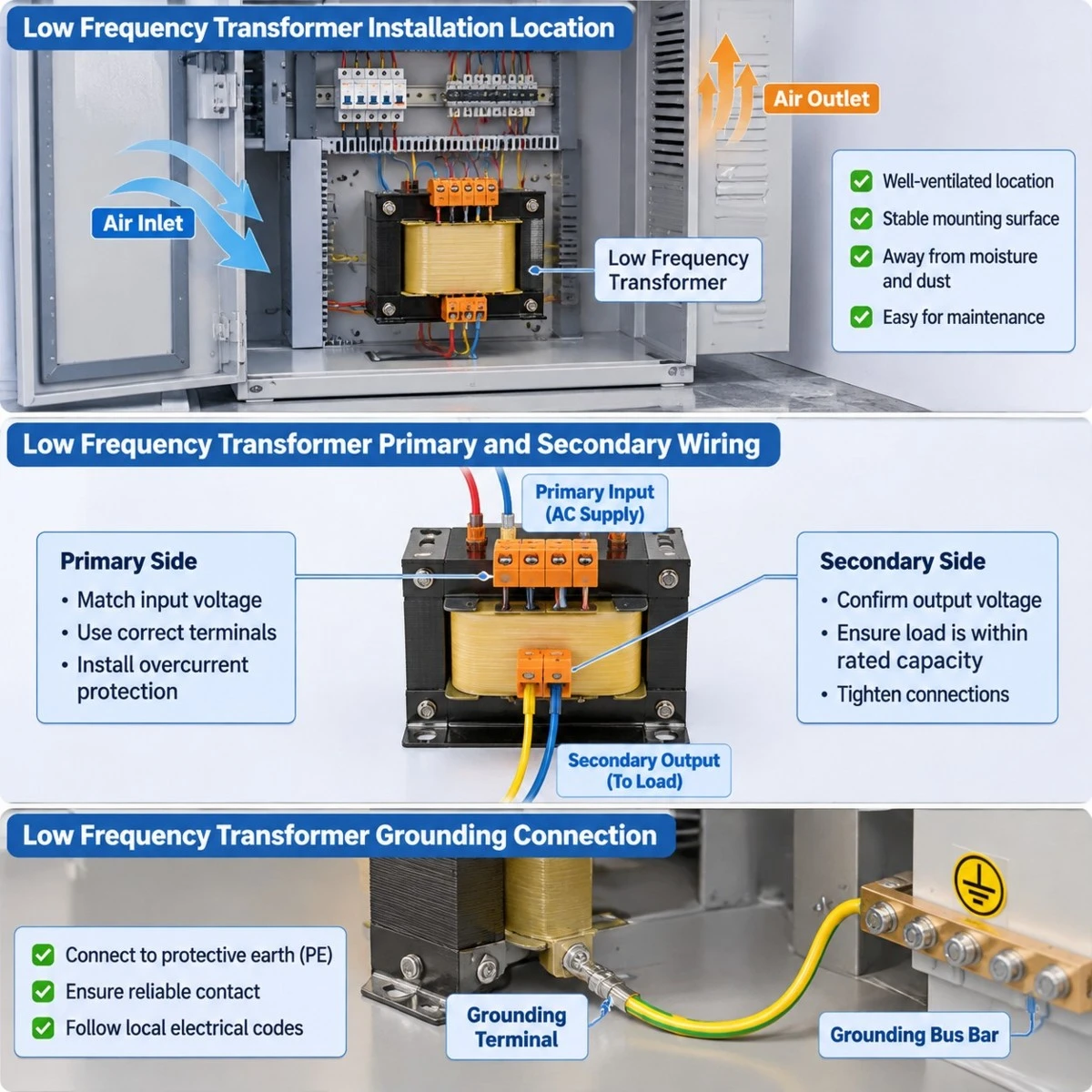
For industrial control transformers, correct grounding is particularly important because these devices are frequently installed inside metal electrical control cabinets.
6. Perform Pre-Energization Inspection and Testing
Before switching on the power supply, carry out a complete installation inspection.
This step helps identify wiring mistakes, mechanical damage, loose connections, and other potential problems before the transformer enters service.
A qualified electrical professional should verify the following:
| Inspection Item | What to Check |
|---|---|
| Nameplate | Confirm voltage, frequency, and rated capacity |
| Mounting | Ensure the transformer is securely installed |
| Primary wiring | Verify input terminals and connections |
| Secondary wiring | Confirm output terminals and voltage configuration |
| Grounding | Check protective earth continuity |
| Electrical connections | Inspect for loose or damaged connections |
| Ventilation | Ensure adequate airflow |
| Protection | Verify appropriate protective devices |
| Insulation | Perform approved insulation tests where required |
Insulation resistance testing should only be performed using an appropriate procedure and test voltage specified by the manufacturer. Sensitive electronic components must be isolated when necessary.
Once the inspection is complete, the responsible electrical professional can proceed with commissioning according to the approved procedure.
7. Energize the Transformer and Monitor Its Operation
After all installation checks have been successfully completed, the transformer can be energized following the approved electrical switching procedure.
During initial operation, pay attention to several important operating conditions.
- Output voltage: Measure the secondary voltage and confirm that it falls within the specified operating range.
- Temperature: Monitor the transformer's operating temperature to identify abnormal heating.
- Operating noise: Listen for unusual humming, buzzing, or vibration that may indicate mechanical or electrical problems.
- Load condition: Ensure that the connected equipment operates within the transformer's rated capacity.
- Electrical protection: Verify that protective devices operate correctly and that no abnormal conditions are present.
If the transformer produces excessive noise, overheats, or delivers an unstable output voltage, disconnect it safely and investigate the cause before returning it to service.
Never attempt to inspect or repair an energized transformer.
8. Common Low Frequency Transformer Installation Mistakes to Avoid
Even a high-quality low frequency transformer may experience performance problems if it is installed incorrectly.
Here are some common installation mistakes:
| Common Mistake | Possible Consequence | Recommended Solution |
|---|---|---|
| Incorrect input voltage | Overheating or equipment damage | Verify the nameplate before wiring |
| Undersized conductors | Excessive temperature rise | Calculate conductor requirements correctly |
| Poor grounding | Increased electrical shock risk | Follow approved grounding requirements |
| Insufficient ventilation | Excessive operating temperature | Maintain required airflow |
| Loose electrical connections | Heating and unstable operation | Follow specified tightening procedures |
| Incorrect load selection | Overloading and voltage drop | Calculate the actual load requirements |
| Wrong frequency selection | Increased losses or overheating | Match the rated supply frequency |
Avoiding these mistakes can significantly improve transformer reliability and reduce unexpected maintenance costs.
9. How to Maintain a Low Frequency Transformer After Installation
Proper maintenance helps extend the service life of a low frequency transformer and maintain consistent performance.
Recommended maintenance activities include:
- Regularly inspect the transformer enclosure for physical damage.
- Keep ventilation openings clean and unobstructed.
- Check for unusual operating noise or vibration.
- Monitor operating temperature under normal load conditions.
- Inspect accessible electrical connections during scheduled maintenance.
- Verify grounding integrity and protective device conditions.
- Investigate any abnormal output voltage or overheating immediately.
The inspection frequency should be determined by the operating environment, equipment requirements, and manufacturer's recommendations.
For industrial applications with continuous operation, a preventive maintenance schedule can help identify potential problems before they cause equipment downtime.
Conclusion: Install Your Low Frequency Transformer Correctly for Reliable Performance
Installing a low frequency transformer correctly requires careful attention to electrical specifications, mounting conditions, wiring, grounding, ventilation, and commissioning.
By following the manufacturer's installation instructions and applicable electrical safety regulations, qualified professionals can help ensure stable voltage conversion, safe operation, and long-term equipment reliability.
Choosing the right transformer is equally important. Factors such as rated capacity, input and output voltage, operating frequency, insulation class, and application requirements should all be considered before purchasing.
If you are looking for a reliable BK transformer or a customized low frequency transformer for industrial control applications, working with an experienced transformer manufacturer can help you identify the right solution.
Contact our team today to discuss your transformer requirements and request a product quotation.
For more information, please contact us at sales@xfullstar.com