

How to Measure Leakage Inductance of Common Mode Chokes
Nov 07, 2020
Leave a message
Leakage inductance is an important parameter in magnetic components, especially in common mode chokes used for EMI suppression, power supplies, and communication equipment. Understanding how to measure and control leakage inductance helps engineers optimize filter performance, reduce electromagnetic interference, and improve system reliability.
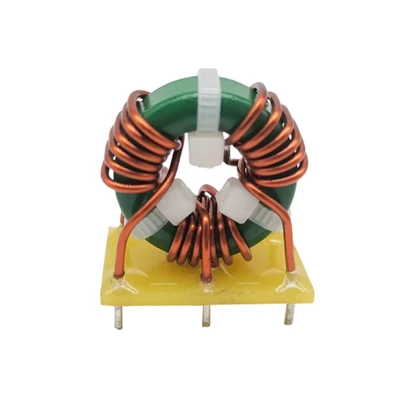

This article explains what leakage inductance is, why it matters, how to measure leakage inductance of common mode chokes, and which factors affect its value.
What Is Leakage Inductance?
In an ideal transformer or coupled inductor, all magnetic flux generated by one winding links perfectly with the other winding. However, in practical magnetic components, some magnetic flux does not fully couple between windings. This uncoupled magnetic flux creates leakage inductance.
Leakage inductance can be defined as the inductance caused by leakage flux that does not link both windings of a magnetic component.
For common mode chokes, leakage inductance exists because the two windings are not perfectly coupled due to factors such as:
- Winding arrangement
- Distance between windings
- Core structure
- Insulation thickness
- Manufacturing tolerances
Although common mode chokes are mainly designed to suppress common mode noise, their leakage inductance also affects differential mode impedance and overall EMI filter performance.
Why Is Leakage Inductance Important in Common Mode Chokes?
Leakage inductance directly influences the electrical characteristics of common mode chokes.
1. Impact on EMI Filter Performance
Common mode chokes are widely used in EMI filters to reduce high-frequency interference generated by switching power supplies, converters, and electronic devices.
The leakage inductance contributes additional impedance, especially for differential mode noise. Properly controlled leakage inductance can improve noise suppression across a wider frequency range.
2. Influence on High-Frequency Characteristics
At high frequencies, parasitic parameters become increasingly important.
Excessive leakage inductance may cause:
- Resonance problems
- Reduced filtering efficiency
- Unexpected impedance characteristics
Therefore, engineers need to evaluate leakage inductance together with parasitic capacitance and winding structure.
3. Effect on Power System Reliability
In power conversion applications, uncontrolled leakage inductance may contribute to:
- Voltage spikes
- Switching noise
- Additional losses
- Reduced efficiency
Optimizing leakage inductance is especially important for high-frequency switching applications.
How to Measure Leakage Inductance of a Common Mode Choke?
The most common method for measuring leakage inductance is using an LCR meter or impedance analyzer.
Method 1: LCR Meter Measurement
Step 1: Disconnect the Common Mode Choke
Remove the component from the circuit or isolate the winding terminals to avoid interference from other components.
Step 2: Short One Winding
For a two-winding common mode choke:
- Keep one winding connected to the LCR meter
- Short-circuit the other winding
Shorting one winding prevents the measurement from including the main inductance caused by mutual coupling.
Step 3: Measure Inductance
Connect the LCR meter to the remaining winding and measure the inductance value.
The measured value represents the leakage inductance of the common mode choke.
Step 4: Record Test Conditions
Leakage inductance measurements should include test conditions such as:
- Test frequency
- Measurement voltage
- Temperature
- Instrument accuracy
Because leakage inductance can vary with frequency, consistent test conditions are important.
Leakage Inductance Testing Equipment
Common equipment used for leakage inductance measurement includes:
1. LCR Meter
An LCR meter is commonly used for:
- Inductance measurement
- Resistance measurement
- Capacitance measurement
It is suitable for laboratory testing and production inspection.
2. Impedance Analyzer
An impedance analyzer provides more detailed frequency characteristics and is useful for:
- High-frequency magnetic components
- EMI filter analysis
- Advanced design verification
3. Transformer Analyzer
For manufacturers producing magnetic components, transformer analyzers can automatically test:
- Leakage inductance
- Turns ratio
- Winding resistance
- Inductance
These instruments improve quality control during mass production.
Factors Affecting Leakage Inductance
The leakage inductance of a common mode choke depends on several design and manufacturing factors.
| Factor | Effect on Leakage Inductance |
|---|---|
| Winding distance | Larger distance usually increases leakage inductance |
| Winding arrangement | Better coupling reduces leakage inductance |
| Core structure | Different core designs change magnetic flux distribution |
| Number of turns | More turns may increase leakage effects |
| Insulation thickness | Larger insulation distance can increase leakage flux |
| Manufacturing tolerance | Variations affect consistency |
How to Reduce Leakage Inductance in Common Mode Chokes?
Engineers can reduce leakage inductance through optimized magnetic design.
1. Improve Winding Coupling
Closer coupling between windings allows more magnetic flux to link both windings and reduces leakage flux.
Common methods include:
Placing windings closer together
Using optimized winding arrangements
Increasing winding overlap
2. Optimize Core Design
The core material and structure affect magnetic flux distribution.
Selecting suitable:
Ferrite cores
can help achieve the required leakage inductance characteristics.
3. Adjust Winding Structure
Different winding methods can significantly influence leakage inductance.
Examples include:
Layer winding
Bifilar winding
Sectional winding
The optimal structure depends on the application requirements.
Difference Between Leakage Inductance and Common Mode Inductance
Leakage inductance and common mode inductance are related but different parameters.
| Parameter | Common Mode Inductance | Leakage Inductance |
|---|---|---|
| Main function | Suppress common mode noise | Affect differential impedance |
| Magnetic coupling | Relies on coupled windings | Caused by uncoupled flux |
| Application | EMI filtering | Noise control and circuit behavior |
| Design goal | Usually higher value | Controlled value |
A common mode choke must balance both parameters to achieve effective EMI suppression.
Applications of Common Mode Chokes with Controlled Leakage Inductance
Common mode chokes are widely used in:
Switching power supplies
Battery charging systems
Automotive electronics
Industrial control equipment
Renewable energy systems
Communication equipment
Consumer electronics
In these applications, stable leakage inductance helps maintain consistent EMI performance.
How Xfullstar Controls Leakage Inductance in Magnetic Components
As a professional magnetic component manufacturer, Xfullstar provides customized common mode chokes and inductors designed for different EMI suppression requirements.
Through optimized:
Core selection
Winding design
Manufacturing processes
Quality testing procedures
Xfullstar helps customers achieve reliable electrical performance and stable production quality.
Customized solutions are available for applications requiring specific inductance values, leakage inductance control, and frequency characteristics.
FAQ
1.What is leakage inductance in a common mode choke?
Leakage inductance is the inductance produced by magnetic flux that does not completely couple between the windings of a common mode choke.
2.How do you measure leakage inductance?
Leakage inductance is commonly measured by shorting one winding and measuring the remaining winding with an LCR meter or impedance analyzer.
3.Is lower leakage inductance always better?
Not necessarily. The optimal leakage inductance depends on the application. Some designs require controlled leakage inductance to achieve specific EMI filtering characteristics.
4.What causes high leakage inductance?
High leakage inductance can result from:
Poor winding coupling
Large winding distance
Improper core design
Increased insulation spacing
5.Can leakage inductance affect EMI performance?
Yes. Leakage inductance influences differential mode impedance and can affect the overall performance of EMI filters.
Conclusion
Leakage inductance is a key parameter in common mode choke design. Accurate measurement and proper control of leakage inductance help engineers improve EMI suppression performance, optimize circuit reliability, and achieve stable product performance.
By understanding measurement methods, influencing factors, and design techniques, engineers can select and develop common mode chokes that meet demanding electrical requirements.
For more information, please contact us at sales@xfullstar.com