

Brief Introduction of Inductor
Sep 04, 2018
Leave a message
1.The Essence of Inductor
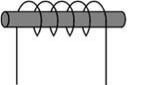
The so-called inductor refers to an inductive device, which is an electromagnetic induction element wound with an insulated wire (such as an enameled wire, a cotton-covered wire, etc.).
In a circuit, when a current flows through a conductor, an electromagnetic field is generated. The magnitude of the electromagnetic field divided by the magnitude of the current is the inductance.
Inductance is a physical quantity that measures the ability of a coil to generate electromagnetic induction. A current is applied to a coil, and a magnetic field is generated around the coil, and the coil has a magnetic flux. The larger the power supply to the coil, the stronger the magnetic field and the greater the magnetic flux through the coil. Experiments have shown that the magnetic flux through the coil is proportional to the current flowing in, and their ratio is called the self-inductance coefficient, also called inductance.
2.Inductance classification
Classified by inductance: fixed inductance, variable inductance.
Classified according to the properties of the magnetizer: air core coil, ferrite coil, iron core coil, copper core coil.
Classified by nature of work: antenna coil, oscillating coil, choke coil, trap coil, deflection coil.
Classified by the winding structure: single layer coil, multilayer coil, honeycomb coil.
Classified by operating frequency: high frequency coil, low frequency coil.
According to structural characteristics: magnetic core coil, variable inductance coil, color code inductor coil, non-magnetic core coil, etc.
Air core coil inductors, core inductors and copper core inductors are generally medium or high frequency inductors and iron core inductors are mostly low frequency inductors.
3.Inductor material and process
The inductor is generally composed of a bobbin, a winding, a shield, an encapsulating material, a magnetic core, and the like.
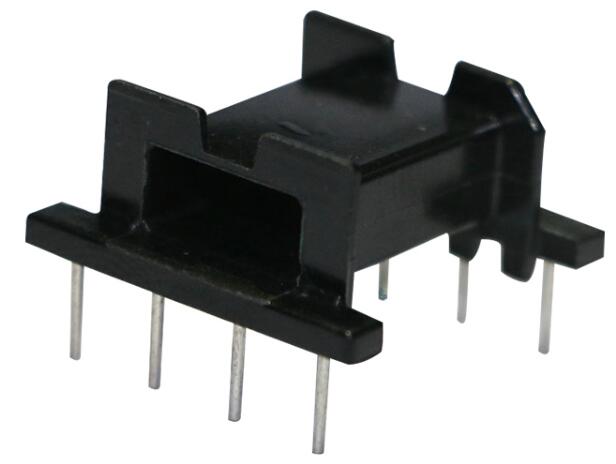
1) Bobbin: Refers to the bracket that winds the coil. It is usually made of plastic, bakelite or ceramic, and can be made into different shapes according to actual needs. Small inductors generally do not use a bobbin, but directly wrap the enamel wire around the core. The hollow inductor does not need a core, a bobbin and a shield, but is first wound on the mold and then the mold is removed, and the coils are pulled apart by a certain distance.
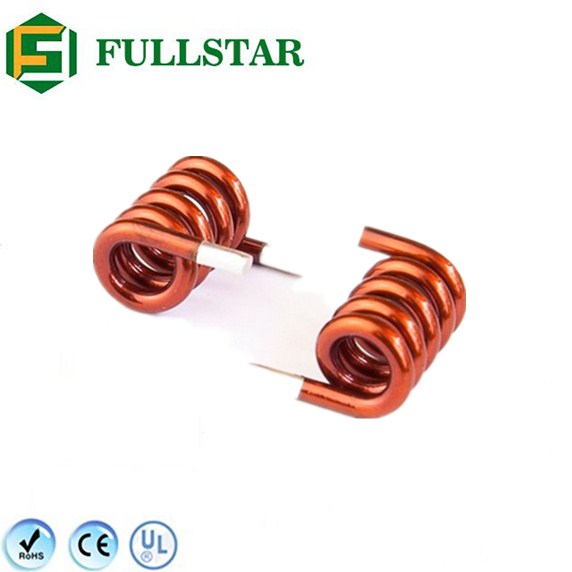
2) Winding: refers to a group of coils with specified functions, which are divided into single layers and multiple layers. The single layer has two forms of dense winding and inter-winding; the multilayer has a plurality of layers of flat winding, random winding, and honeycomb winding and other methods.
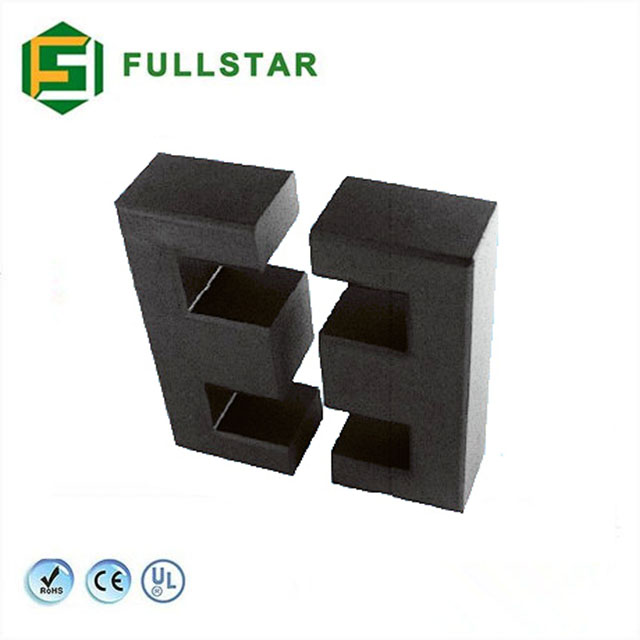
3)Core: Generally, nickel-zinc ferrite or manganese-zinc ferrite is used, which has various shapes such as "I" shape, column shape, hat shape, "E" shape, and pot shape.
Iron core: mainly silicon steel sheet, permalloy, etc., its shape is mostly "E" shaped.
4)Shield: the shield is used for avoid the magnetic field generated by some inductors during operation affecting the normal operation of other circuits and components. Inductors with shields increase the loss of the coil and pull the Q down.
5)Packaging material: After some inductors (such as color code inductors, color ring inductors, etc.) are wound, the coil and the core are sealed with a packaging material. The packaging material is made of plastic or epoxy resin.
CONTACT INFO :
QQ: 1478124633
Skype: sophie84_2005116
Wechat : 55911767
WhatsApp: 15829062422
TEL: 86-29-86676405 /
15829062422/ 18192289495